



Our Blog Posts
Misconceptions about Pocket Door Kits
Posted on: 19/08/2024

Expert Advice - Over 35 years experience

We're Rated Excellent on Trustpilot

1000's of Products In Stock Ready

National Delivery*
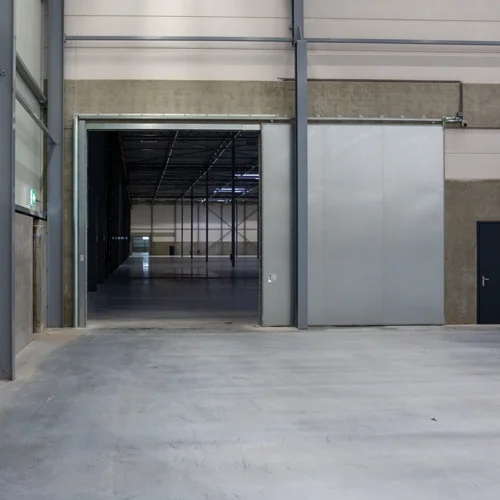
Choosing between galvanised and stainless steel sliding door hardware sounds like a simple box-ticking decision. And in many projects, it is. But it’s also one of those choices that can come back to create future complications years later. Not because the hardware was poor. But because the environment it’s working in was misunderstood.
At Runners UK, we supply a wide range of industrial sliding door hardware designed to perform in demanding environments — but correct specification is always critical.
Most of the time, load ratings aren’t the problem. The real issues are:
This comparison is not about which material is better in general. It is about which is appropriate for the conditions the door will face over its working life.
Sliding door hardware tends to be installed early and then forgotten. When it works well no one pays attention. But when corrosion or wear begins to hamper performance, the impact is rarely short lived.
These issues tend to build up over time. A door may start to feel heavier, the rollers may lose their once smooth travel, or the track may begin to wear down. The system can become harder to operate, and eventually it can break down completely. In active industrial environments, even minor access restrictions can cause significant disruption. Repairs can be costly in downtime, changes to workflow, or temporary shutdowns, and by the time replacement is considered, the cost is usually far greater than it would have been at the beginning.
Making the correct choice on material at the start plays a direct role in how much maintenance may be needed and how long the hardware continues to perform in real conditions rather than ideal conditions.


The most common mistake in specifying sliding door hardware is selecting a material before fully considering the environment it will operate in.
“Industrial” covers a wide range of conditions. Some doors operate internally, in dry, temperature-stable spaces with limited airborne contaminants. Others are exposed to moisture, frequent wash-downs, chemicals, or external weather. Treating these environments as equivalent is where problems begin, particularly when specifying a complete sliding door kit without fully assessing exposure levels.
Key factors that should drive material choice include moisture levels, cleaning regimes, airborne contaminants, and whether the door is internal or external. Maintenance access also matters. Hardware in hard-to-reach locations needs to be more tolerant of neglect than systems that can be easily inspected and serviced.
Galvanised and stainless steel are not alternatives chosen on preference. They are responses to different levels of environmental stress.
Galvanised sliding door hardware is widely used in industrial settings for good reason. In dry, controlled environments, it offers a reliable balance between durability and cost. Internal warehouses, manufacturing areas with stable conditions, and logistics spaces without aggressive cleaning routines are typical examples where galvanised systems perform well over long periods.
Problems arise when galvanised hardware is exposed to conditions it was never intended to handle. Regular moisture, condensation, external exposure, or harsh cleaning chemicals accelerate the breakdown of the protective zinc layer. Once that protection is compromised, corrosion progresses quickly.
When galvanised hardware fails in these situations, it is often described as premature. In reality, it is usually a specification issue rather than a product one. The material has been asked to operate outside the conditions it is suited for.
Used appropriately, galvanised hardware is a sensible and dependable choice. Used in the wrong environment, it becomes a predictable liability.

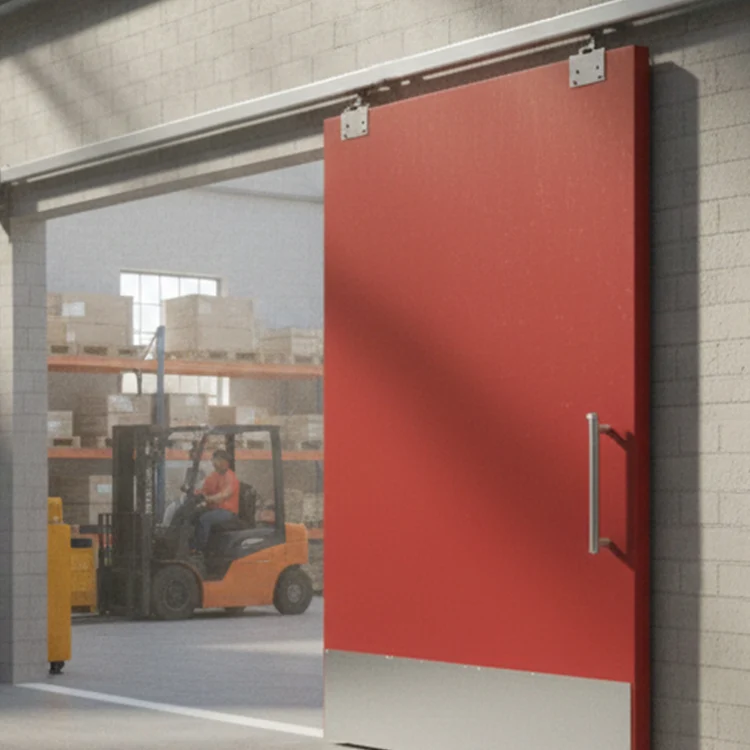
Stainless steel hardware is not an upgrade for its own sake. In many industrial environments, it is simply the correct material for the job — particularly when specifying stainless steel sliding door gear for high-exposure applications.
Wash-down areas, hygiene-controlled facilities, food and pharmaceutical production, and chemically aggressive environments place demands on hardware that galvanised steel is unlikely to tolerate long term. External doors in coastal locations or areas exposed to salt-laden air present similar challenges.
In these conditions, stainless steel offers a level of corrosion resistance that significantly reduces the need for intervention. This is particularly important where regular maintenance is difficult or where failure could impact compliance, safety, or operational continuity.
The higher upfront cost of stainless steel is often cited as a barrier. However, avoiding it in environments that clearly demand it is a false economy. The cost is usually recovered through reduced maintenance, fewer replacements, and more predictable long-term performance.
There is a tendency to simplify this decision in two unhelpful ways. One is to default to galvanised hardware to control initial costs. The other is to specify stainless steel everywhere to avoid risk.
Both approaches have consequences. Under-specifying leads to earlier failure and higher long-term costs. Over-specifying ties up budget unnecessarily, particularly in large projects where hardware quantities are high and environmental risk is low.
The correct approach is to match the material to the conditions the hardware will face throughout its service life. That means being realistic about exposure, cleaning practices, and maintenance access — whether specifying heavy-duty industrial hardware or a modern trackless sliding door in a commercial setting.
When specified with those factors in mind, both galvanised and stainless steel systems can deliver reliable, long-term performance. The difference lies not in the material itself, but in how well it matches the reality of the environment it operates in.
Need help selecting the right material for your industrial sliding door hardware? Our team can advise on the most suitable specification for your environment.
Contact us to discuss your project requirements.

Ordering is faster, and repeat purchases are simpler with Runners Sliding Systems
Discover how My Products and R Points can transform your business operations, streamline purchasing, and lower costs across every order.